The Rise of 360 Virtual Tours and Key Camera Choices
- trunga1331
- 25 thg 12, 2025
- 5 phút đọc
In an age dominated by digital innovation, the emergence of 360 virtual tours is transforming how people engage with spaces from afar. These immersive experiences not only enhance visual storytelling but also surpass the limitations of traditional photography, allowing users to feel present in properties, tourist attractions, and unique environments they may not be able to access physically. As the demand for 360 virtual tours rises across sectors—most notably real estate and tourism—selecting the appropriate 360 camera has become essential for both professionals and hobbyists. This guide delves into must-have camera features, evaluates leading models, and provides insights to navigate the landscape of 360 photography effectively.
Understanding 360 Camera Virtual Tours
360 cameras, also known as omnidirectional cameras, have seen significant advancements, making them accessible to everyone from beginners to experienced photographers. These innovative devices enable users to capture expansive 360-degree images in a single shot, contributing to captivating and realistic virtual experiences. Here, we outline the essential features to look for when selecting a 360 camera and highlight some of the leading models available for immersive virtual tours.

Essential Features of a 360 Camera
When choosing a 360 camera for creating virtual tours, recognizing its key features can greatly influence both the quality and overall success of your projects.
Image Stitching
Most 360 cameras utilize dual lenses to capture an entire 360-degree view. The images are then combined using stitching software, which blends the images seamlessly to eliminate visible seams or errors. Quality stitching is essential for delivering a smooth panoramic view, thereby enhancing overall user engagement.
Dynamic Range
Cameras equipped with an extended dynamic range (HDR) can accommodate a variety of lighting conditions, ensuring clarity in both bright and shadowed areas. This feature is particularly vital in virtual tours that occur in spaces with fluctuating light sources, such as indoors or outdoors at different times of day.
Low Light Performance
Superior performance in low-light scenarios is critical for capturing crisp, high-quality images in dimly lit settings, such as indoor events or at twilight. A camera's ability to perform well in these conditions can significantly impact the quality of the tour.
Ease of Use
A user-friendly interface with intuitive controls can benefit beginners in 360 photography significantly. An ideal camera should facilitate quick setup and operation, streamlining the virtual tour creation process.
Software Compatibility
Ensuring your chosen camera is compatible with your intended virtual tour software is crucial. A cohesive workflow—from image capture through editing to publication—enhances productivity and efficiency.
See more: How to Take 360 Real Estate Photos
Assessing Your Needs
Before exploring specific camera models, it's vital to define your needs:
Professional vs. Personal Use
Professional photographers typically seek advanced features like higher resolution and superior stitching accuracy, whereas casual users may prioritize affordability and ease of use.
Type of Tours
The intended purpose of your virtual tours—whether for real estate, tourism, or educational platforms—often determines which camera features are essential to meet quality expectations.
Gaining an understanding of these crucial characteristics in relation to your specific requirements will strengthen your decision-making process, ensuring the right 360 camera elevates your virtual tours and effectively captivates viewers.
In-Depth Reviews of Leading 360 Cameras
Here we present detailed evaluations of some of the top 360 camera models. Each review highlights specifications, strengths, weaknesses, and optimal use cases for creating virtual tours.
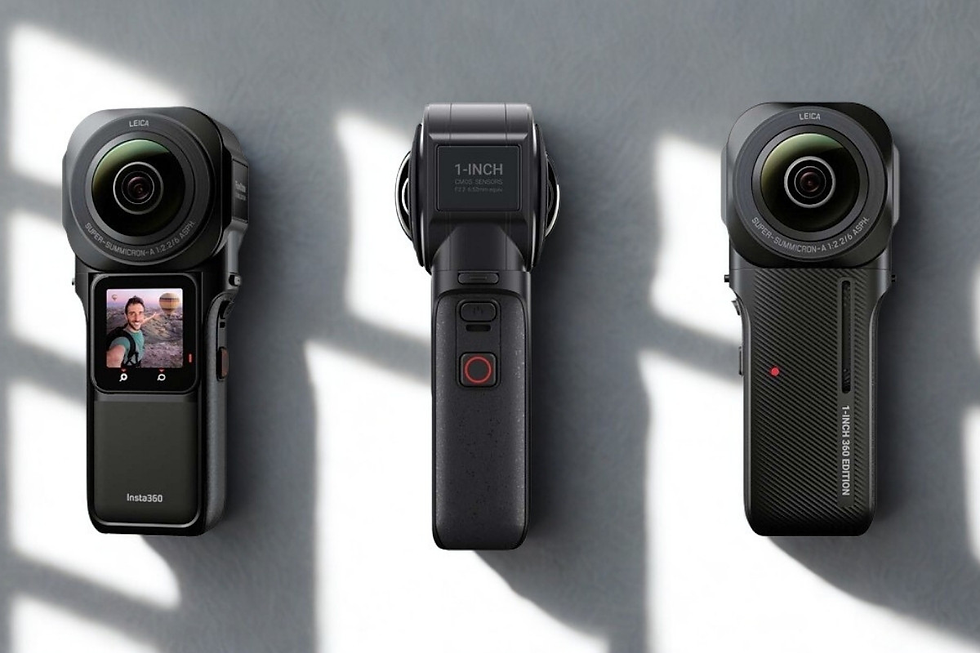
Insta360 One Inch RS
The Insta360 One Inch RS distinguishes itself with a modular design and exceptional image quality, leveraging a one-inch sensor developed with Leica.
Specifications:
Resolution: Up to 5.7K video and 19MP photos
Field of View: 360 degrees via dual-lens configuration
Image Stabilization: FlowState stabilization technology
Pros and Cons:
Pros: Exceptional image capture, adaptable modular system, waterproof capability
Cons: Higher price point; battery may not support prolonged shooting sessions
Best Use Case: Ideal for professionals creating virtual tours in luxury hospitality or real estate.
Price Range and Availability: Priced around $800, this model is available online and at major electronics retailers.
Insta360 X4
The upgraded Insta360 X4 offers enhanced stabilization and improved low-light performance.

Specifications:
Resolution: 5.7K video
Field of View: 360 degrees
Image Stabilization: Advanced Horizon Lock feature
Pros and Cons:
Pros: Excellent stabilization, strong application support, suitable for dynamic environments
Cons: Image quality may drop in extremely low-light conditions
Best Use Case: Perfect for adventure tourism and outdoor activities.
Price Range and Availability: Priced around $500 at camera equipment retailers and online stores.
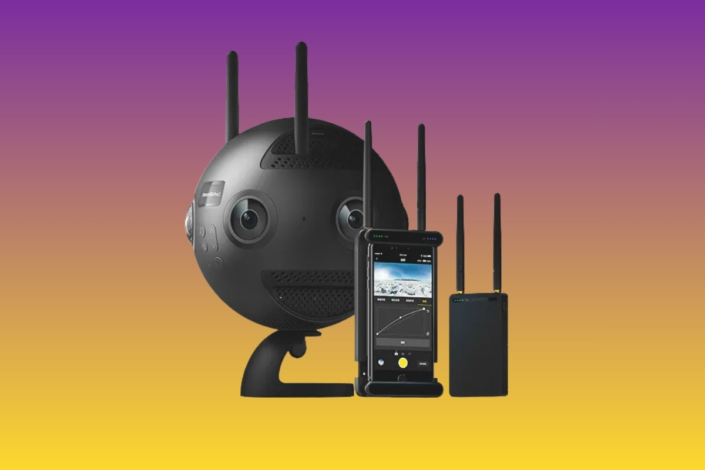
Insta360 Pro 2
The Insta360 Pro 2 is targeted at professionals, featuring six lenses for high-quality VR content and supporting up to 8K 3D video.
Specifications:
Resolution: 8K video and 3D capabilities
Field of View: 360 degrees
Image Stabilization: Farsight 360° remote monitoring
Pros and Cons:
Pros: High resolution, real-time stitching, and 3D video functions
Cons: Heavier and primarily suited for stationary use, high price
Best Use Case: Ideal for cinematic VR productions or detailed virtual tours in museums and historical venues.
Price Range and Availability: Approximately $5000, this model is available through specialized audiovisual equipment suppliers.
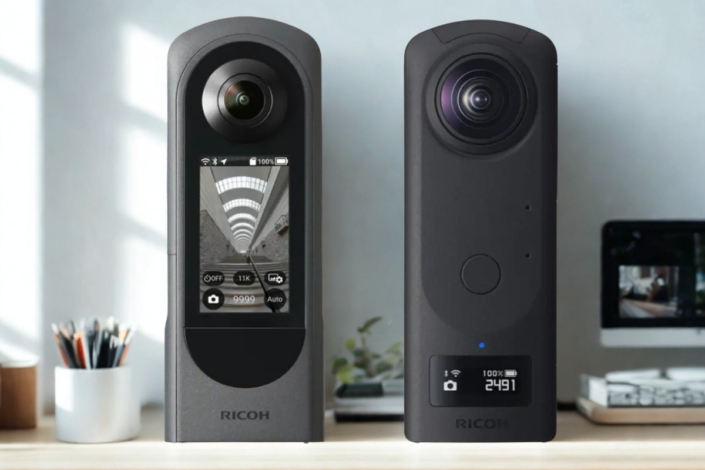
Ricoh Theta Z1
Renowned for its dual one-inch sensors, the Ricoh Theta Z1 offers DSLR-quality images in a compact design and supports RAW shooting.
Specifications:
Resolution: Up to 4K video and 23MP photos
Field of View: 360 degrees
Image Stabilization: None; relies on sensor quality
Pros and Cons:
Pros: Excellent image quality, RAW shooting capability, compact design
Cons: Limited video resolution, lacks built-in stabilization
Best Use Case: Well-suited for real estate and indoor virtual tours that emphasize image quality.
Price Range and Availability: Typically around $1000, available through online platforms and specialty camera stores.
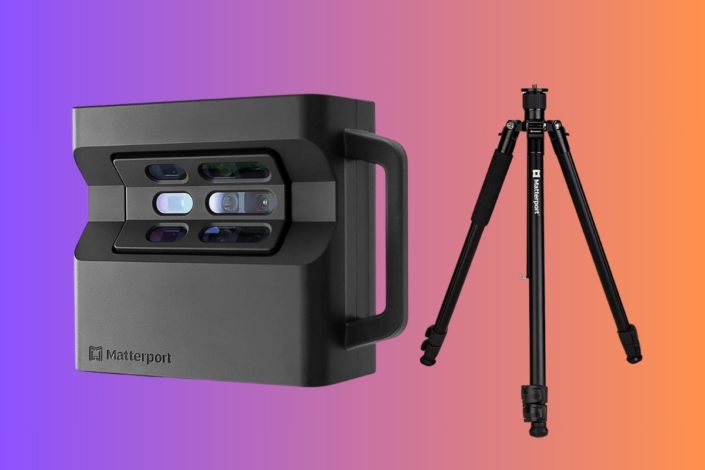
Matterport Pro2
Designed specifically for capturing detailed 3D virtual tours, the Matterport Pro2 is heavily used in the real estate market.
Specifications:
Resolution: Professional-grade 134MP equivalent in 3D
Field of View: 360 degrees
Image Stabilization: Not applicable
Pros and Cons:
Pros: Unmatched detail in 3D modeling, seamless software integration
Cons: Primarily intended for indoor use, high price
Best Use Case: Essential for agents and architects needing intricate 3D representations of properties.
Price Range and Availability: Costs around $3400, available through Matterport and its authorized resellers.
Matterport Pro3
The successor to the Pro2, the Matterport Pro3 boasts faster scans and improved accuracy, making it suitable for larger or complex environments.

Specifications:
Resolution: Enhanced scanning resolution
Field of View: 360 degrees
Image Stabilization: Not applicable
Pros and Cons:
Pros: Faster processing, enhanced precision, improved detail capture
Cons: Higher cost, primarily aimed at professional applications
Best Use Case: Most effective for creating virtual tours of extensive commercial properties or complex architectural projects.
Price Range and Availability: Expected to be more expensive than the Pro2, targeting high-end professional markets.
Side-by-Side Camera Comparison
Category | Insta360 One Inch RS | Insta360 X4 | Insta360 Pro 2 | Ricoh Theta Z1 | Matterport Pro2 | Matterport Pro3 |
Image Output | 5.7K video, 19MP | 5.7K video | 8K video | 4K video, 23MP | 134MP 3D capture | Advanced 3D system |
Viewing Angle | Complete 360° | Complete 360° | Complete 360° | Complete 360° | Complete 360° | Complete 360° |
Stabilization Technology | FlowState | Horizon Lock | Farsight control | None | Not required | Not required |
Performance in Low Light | Reliable indoors | Improved sensor | Stable exposure | Outstanding quality | Adequate for scanning | Enhanced handling |
User Experience | Easy and adaptable | Simple controls | Requires expertise | User-friendly | Guided workflow | Designed for large operations |
Typical Price Range | ~$800 | ~$500 | ~$5,000 | ~$1,000 | ~$3,400 | Higher than Pro2 |
Best Use in Real Estate | Residential tours | Quick listings | Premium VR tours | Detailed interiors | 3D property models | Large commercial spaces |
This comparative analysis of camera models addresses essential features to support informed decision-making according to your virtual tour production needs.
Read more:
Final Thoughts
Choosing the right 360 camera for virtual tours involves balancing individual specifications with your project goals and intended uses. From the image quality and adaptability of the Insta360 One Inch RS to the outdoor reliability of the Insta360 X4, each model meets distinct environments and needs. The Insta360 Pro 2 and Pro3 shine in cinematic applications, offering unmatched resolution, while the Ricoh Theta Z1 excels in indoor settings demanding high-quality detail. With unique advantages tailored to diverse requirements, these cameras empower photographers to craft captivating and immersive virtual experiences. `


Bình luận